

Blog

Choosing the 2024 Toyota Camry vs Hyundai Sonata

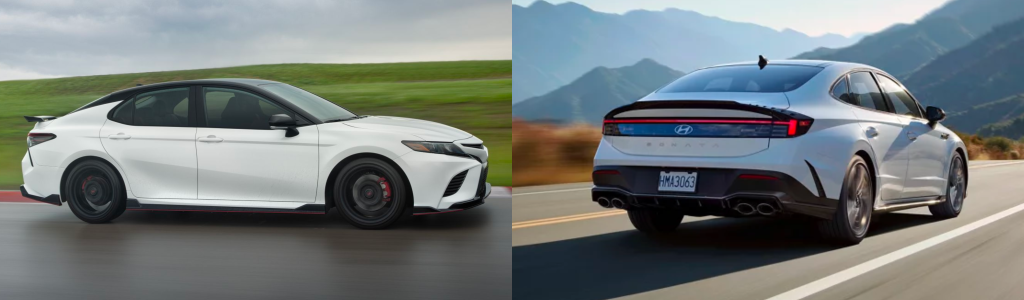
2024 Toyota Camry vs Hyundai Sonata

When it comes to selecting a full-size sedan, thorough consideration is essential. That's why we're comparing the 2024 Toyota Camry and the 2024 Hyundai Sonata. As your trusted Toyota dealership, Waldorf Toyota proudly highlights the Camry's exceptional features and performance.

The 2024 Toyota Camry leads with groundbreaking eco-friendly technology, setting new standards for sustainability without compromising power. Its innovative engineering ensures an environmentally conscious yet exhilarating driving experience. 

When it comes to selecting a full-size sedan, thorough consideration is essential. That's why we're comparing the 2024 Toyota Camry and the 2024 Hyundai Sonata. As your trusted Toyota dealership, Waldorf Toyota proudly highlights the Camry's exceptional features and performance. 

The 2024 Toyota Camry leads with groundbreaking eco-friendly technology, setting new standards for sustainability without compromising power. Its innovative engineering ensures an environmentally conscious yet exhilarating driving experience. 

While the Sonata offers versatility and robust performance, it doesn't quite match the Camry's level of innovation and eco-friendly initiatives. For drivers seeking a sedan that combines performance with environmental consciousness, the Camry is the standout choice. 

Visit our showroom today to explore the remarkable features of the 2024 Toyota Camry firsthand and experience its unparalleled driving experience.

2024 Toyota Camry vs. 2024 Hyundai Sonata: Performance

Nestled in the vibrant landscape of Waldorf, Maryland, Waldorf Toyota proudly presents the 2024 Toyota Camry and the 2024 Hyundai Sonata as prime choices for high-performance sedan enthusiasts.

Toyota Camry

Hyundai Sonata

Base Engine: 203 hp

Base Engine:191 hp

Hybrid Options Available

Hybrid Options Available

6 Trim Options

5 Trim Options

Base Engine: 184 lb-ft of torque

Base Engine: 181 lb-ft of torque

The 2024 Toyota Camry stands out with its robust base engine, delivering 203 horsepower and offering an available hybrid option for efficient yet powerful drives around Waldorf. Boasting six trim options, the Camry caters to diverse preferences with versatility at its core. 

Meanwhile, the 2024 Hyundai Sonata features a base engine producing 191 horsepower and also offers a hybrid option, striking a balance between performance and eco-friendliness. With five trim options available, the Sonata provides ample choice to suit individual needs.

In the realm of sedan performance and adaptability, the 2024 Toyota Camry emerges as the ultimate choice. Explore its power and efficiency at Waldorf Toyota in Waldorf, Maryland, your premier destination for the latest Camry models. Let our knowledgeable team assist you in finding the perfect sedan for your journeys ahead.

2024 Toyota Camry vs. 2024 Hyundai Sonata: Safety & Technology

When it comes to integrating technology and safety, the 2024 Toyota Camry and 2024 Hyundai Sonata lead the way with innovative features that prioritize both security and user-friendliness.

Toyota Camry

Hyundai Sonata

10-In. Color Head-Up Display

Bluelink Connect Car System

9-In. Multimedia Touchscreen

12.3-In. touch-screen

Panoramic View Monitor

Forward Collision Avoidance Assistance

Front & Rear Parking Assist

Stop and Go Cruise Control

The Camry boasts a 10-inch Color Head-Up Display, a 9-inch Multimedia Touchscreen, and a Panoramic View Monitor with Front and Rear Parking Assist. Meanwhile, the Hyundai Sonata features a Bluelink Connect Car System, a 12.3-inch touch-screen display, and Forward Collision Avoidance Assistance with Stop and Go Cruise Control.

While both vehicles excel in safety and tech, the Camry's emphasis on features like the Color Head-Up Display and Panoramic View Monitor makes it a top choice for those seeking advanced technology in a sedan.

The Superior Choice: 2024 Toyota Camry Over the Hyundai Sonata

In the picturesque settings of Waldorf, Maryland, car buyers face the significant decision between two esteemed sedans: the 2024 Toyota Camry and the 2024 Hyundai Sonata. 

At Waldorf Toyota, we take pride in highlighting the Camry's standout attributes, underscoring its position as the superior choice for those who value innovation alongside environmental stewardship

  • Performance-Tuned Design: The Camry TRD, with its aerodynamic enhancements and red pinstriping, not only exudes a sporty appeal but also emphasizes safety with its Blind Spot Monitor and Rear Cross Traffic Alert.
  • Vibrant Color Options: From Cavalry Blue to Supersonic Red, the Camry's palette offers eight dynamic choices, allowing drivers to express their unique style.
  • Robust Construction: Utilizing the Toyota Next Generation Architecture-K (TNGA-K) platform, the Camry is constructed with high-tensile-strength steel for a solid and responsive driving experience.
  • Superior Handling and Comfort: The Camry's finely tuned suspension system delivers a smooth ride, with the SE and XSE grades adding sport-tuned enhancements for greater agility.
  • Tranquil Interior: Known for its class-leading quietness, the Camry features advanced NVH reduction measures to create a serene cabin environment, perfect for the peaceful drives through Waldorf's serene landscapes.

The 2024 Toyota Camry emerges as the definitive choice for discerning drivers. Its commitment to blending performance with eco-friendly technology sets it apart, ensuring that every drive is not just a journey but a statement of environmental consciousness. 

While the Hyundai Sonata presents a worthy alternative with its own set of advantages, it does not quite reach the comprehensive level of innovation and eco-friendliness offered by the Camry.

Visit Waldorf Toyota to Experience the 2024 Toyota Camry

In conclusion, the 2024 Toyota Camry and the 2024 Hyundai Sonata epitomize excellence in the sedan segment. While both sedans offer commendable strengths, the 2024 Toyota Camry emerges as the premier choice, offering a blend of power, efficiency, and advanced technology.

Cruise into the world of automotive excellence with Waldorf Toyota, where we're more than just a dealership – we're your partners in navigating the journey to your next vehicle. Our comprehensive website offers detailed insights into our services, genuine parts, and flexible financing options, ensuring you have all the information needed to make a well-informed choice.

To explore further the exceptional offerings of the 2024 Toyota Camry and schedule a test drive, contact us at Waldorf Toyota today at (240) 734-3116, or come visit us at 2600 Crain Hwy, Waldorf, MD 20601. 
Experience the pinnacle of driving innovation by scheduling a test drive of the 2024 Toyota Camry at Waldorf Toyota. Our commitment to customer satisfaction sets us apart, making us the go-to destination for all your automotive needs in Waldorf, Maryland.

Recommended Posts

Mechanic hand checking and fixing a broken car in car service garage

Summer Road Trips & Beyond: How to Keep Your Toyota Healthy

August in Southern Maryland does not let up. Blacktop across St. Mary's County holds heat long past sunset, and a Toyota that sits in a surface lot from morning to evening soaks up every degree of it before you ever turn the key. Toyota summer maintenance protects the five systems that heat attacks hardest: battery, tires, air conditioning, coolant, and engine oil. AAA data shows heat, not cold, is the leading cause of battery failure, and tire pressure climbs roughly 1 PSI for every 10°F rise in temperature. Our team at Waldorf Toyota has serviced Toyotas across Southern Maryland for more than ten years, and the same heat-driven repairs roll through our bays every August. Drivers stop in before the run west toward Prince Frederick, families come through ahead of the drive north to Washington D.C., and commuters bring us SUVs that have been baking since the 6 a.m. shift. This guide covers what heat actually does to your battery, tires, air conditioning, and fluids, plus the checks that belong on your list before a long drive. It also covers the season nobody plans for, because post-summer car maintenance is where the real damage usually shows up. Key Points: Toyota Summer Maintenance Heat kills more batteries than winter cold does. AAA reports that heat, not cold, is the leading cause of battery failure, because high temperatures speed up fluid loss and oxidation inside a battery that typically lasts three to five years. A stretch of heat can add about 5 PSI to your tires. Tire pressure rises roughly 1 PSI for every 10°F increase. Over-inflated tires wear unevenly and carry a higher blowout risk on a long highway run. The post-summer inspection is the one almost nobody books. Heat damage builds quietly through June, July, and August, then surfaces as a no-start or a coolant leak months later, which makes a September checkup one of the cheapest forms of insurance a Toyota owner has. Your Summer Toyota Maintenance Checklist at a Glance Southern Maryland summers average around 74°F, and the stretches that matter are the humid 90-degree runs that sit on the region for a week at a time. Here is how that heat lands on each system before we look at them one by one. System What Summer Heat Does to It General Service Interval Battery Accelerates fluid loss and internal oxidation, shortening service life Test annually after year 3; typical life 3 to 5 years Tires Raises pressure roughly 1 PSI per 10°F; heat plus friction increases blowout risk Check monthly and before trips; rotate every 5,000 to 10,000 miles Air Conditioning Exposes slow refrigerant leaks and airflow restrictions under peak load Inspect annually; Toyota lists cabin air filter replacement around every 15,000 to 20,000 miles Cooling System Pushes hoses, radiator, and coolant to their working limits, especially while towing Inspect hoses and coolant level at every service; initial coolant replacement generally falls near 100,000 miles Engine Oil Thins and degrades faster under sustained high temperatures Generally every 5,000 to 10,000 miles, or sooner on severe-duty schedules Intervals above are general guidance. Your owner's manual lists the exact schedule for your model, engine, and driving conditions, and our service advisors can confirm what applies to your vehicle and what your current coverage includes. Two things surprise most drivers here. The battery that dies on a cold January morning was very often damaged the previous July; heat does the structural harm and cold exposes it. Towing changes the math too: a boat run to the Patuxent or a camper hauled toward the Chesapeake moves most Toyotas onto the severe-duty schedule, which shortens several intervals above. Neither shows up as a dashboard light until the damage is done. Why Summer Heat Is Harder on Your Toyota's Battery Than Winter Cold Heat outranks cold as the leading cause of car battery failure, according to AAA. High under-hood temperatures accelerate the loss of internal fluids and speed up oxidation of the battery's components, which quietly erodes its ability to hold a charge. Most car batteries run three to five years, and AAA recommends regular testing once a battery passes the three-year mark. A Toyota that spends its workday in an unshaded lot near Waldorf or St. Charles ages its battery faster than the odometer suggests, and we see exactly that pattern come through our bays every August. A load test takes minutes and tells you far more than a jump start ever will. Toyota Air Conditioning Service: Why the Cold Air Fades in August Weak cooling in a Toyota usually traces to one of three causes: low refrigerant from a slow leak, a clogged cabin air filter, or a compressor nearing the end of its life. A cabin air filter is a pleated filter that cleans the air entering your climate control system, and a loaded one chokes airflow long before refrigerant deserves the blame. Toyota asks owners to replace theirs roughly every 15,000 to 20,000 miles, and humid Southern Maryland summers with heavy pollen loads can shorten that in practice. Drivers searching for car air conditioning service in mid-August are usually dealing with a system that started fading back in June. As a rule of thumb, cooling that weakens gradually points to maintenance. Cooling that quits suddenly usually means a leak. Tire Pressure, Heat, and Blowout Risk on Long Summer Drives Tire pressure rises roughly 1 PSI for every 10-degree increase in air temperature, and a sustained heat wave can push a tire about 5 PSI past its target. Over-inflation wears the center of the tread early and reduces the contact patch doing the actual work. Under-inflation is the more dangerous direction on hot pavement, because a soft tire flexes more, generates more heat, and raises blowout risk over a long run down Route 301 or north on I-95. Correct pressure lives on the driver's door jamb sticker, never on the number molded into the sidewall, and a reading only counts when the tires are cold. Check the spare on the same pass, and we recommend pairing the check with a rotation, generally due every 5,000 to 10,000 miles. Coolant, Oil, and Fluids: Your Toyota's Defense Against Overheating Sustained heat thins engine oil and pushes the cooling system toward its working limits, which puts fluids at the center of any summer service visit. Toyota generally calls for oil, filter, and tire rotation service every 5,000 to 10,000 miles under normal driving. Towing a boat, camper, or work trailer counts as severe duty, and that describes a lot of Southern Maryland drivers between May and September. Engine air filter replacement, cooling system inspection, and transmission fluid checks generally enter a Toyota's schedule near 30,000 miles, while the initial coolant replacement itself usually waits until closer to 100,000. Hoses, clamps, and the radiator deserve a look before a long haul, since the approach to the Nice/Middleton Bridge is a bad place to discover a weeping hose. Post-Summer Car Maintenance: The Inspection Almost Nobody Books Post-summer car maintenance is a seasonal inspection that checks the systems heat wore down before cold weather exposes them. A battery weakened across three months of 90-degree days will often start fine in September and fail on the first sub-freezing morning. Wiper blades bake and crack in the sun, brake fluid absorbs moisture through humid months, and tire pressure drops right back down as temperatures fall, which is why the TPMS light tends to reappear in October. Long summer mileage matters too, since a couple of round trips toward Prince Frederick or Washington D.C. can move a Toyota through an entire service interval in a single season. The September or October visit is the one that keeps a July problem from becoming a January tow, and we book fewer of them than any other seasonal service. Which Toyota Summer Service Do You Need Right Now? The right starting point depends on what your Toyota has been doing this season: A long road trip is coming up: Book a pre-trip inspection covering battery, tires, fluids, brakes, and AC performance. The AC cools, but not like it used to: Start with a cabin air filter check and an AC performance test, since airflow problems are common and inexpensive to rule out. Your battery is past three years old: Ask for a load test, regardless of how the vehicle has been starting. You towed this summer: Move to the severe-duty schedule and prioritize coolant, transmission fluid, and brake inspection. The road trips are behind you: Book a post-summer inspection now, while the calendar is open and the weather has not turned. Schedule Toyota Service at Waldorf Toyota Our Service Center at Waldorf Toyota works out of a facility in the heart of Southern Maryland. Our factory-trained technicians work with genuine Toyota parts, and we serve drivers across Waldorf, St. Charles, Prince Frederick, and Fort Washington, along with families making the regular runs toward Washington D.C. You can schedule service online, or explore our service options when getting to the dealership is the hard part. Book your summer or post-summer inspection today, and contact our team for current service availability and pricing.

Camry vs Corolla vs Crown_MAIN

Camry vs. Corolla vs. Crown: Which Toyota Sedan is Best for Waldorf Drivers?

When shoppers in Waldorf, MD start comparing Toyota sedans, three models often rise to the top of the list: the Toyota Camry, Toyota Corolla, and Toyota Crown. Each one serves a different type of driver, but all three reflect Toyota’s focus on reliability, comfort, and everyday practicality. If you are looking for a Toyota sedan comparison that helps break down the differences in a clear and straightforward way, this guide is a helpful place to start. Whether you commute through Waldorf, St. Charles, Prince Frederick, Washington, D.C., Bowie, or Fort Washington, the right sedan will depend on how much space you need, how much efficiency matters to you, and whether you want a more traditional or more premium driving experience. This comparison of Camry vs Corolla vs Crown looks at the details that matter most so you can better understand which Toyota sedan may fit your driving routine. Quick Highlights The Toyota Corolla is the compact sedan in this comparison, offering simple everyday usability, 13.1 cubic feet of cargo space, and 35 MPG combined on the LE sedan. The Toyota Camry is the midsize sedan in the lineup and now comes with standard hybrid power, with the LE trim reaching up to 51 MPG combined. The Toyota Crown brings a more premium feel to the sedan segment, with hybrid power and 41 MPG combined on the XLE, Limited, and Nightshade trims. All three models seat five passengers, but they each approach comfort, efficiency, and design in a different way. Drivers searching for a Waldorf MD Toyota sedan have strong options across all three nameplates, depending on their priorities. Side-by-Side Overview Model Segment Seating Combined MPG Notes Corolla Compact sedan 5 35 MPG Efficient, easy to maneuver, and well suited to everyday commuting. Camry Midsize sedan 5 Up to 51 MPG Standard hybrid power and a strong balance of comfort and efficiency. Crown Premium sedan 5 41 MPG on most trims, 30 MPG on Platinum A more upscale Toyota sedan with hybrid-focused efficiency. How These Toyota Sedans Compare The Toyota Camry vs Corolla comparison often comes down to size and overall driving feel. The Corolla is the smaller, more compact choice, while the Camry offers more midsize sedan presence and standard hybrid power. For many shoppers, that difference can affect everything from cabin comfort to the way the car feels on longer drives. The Toyota Crown vs Camry comparison adds a different layer. The Crown is designed to feel more premium, with a more upscale approach to the sedan experience. The Camry, on the other hand, stays focused on mainstream practicality while still delivering excellent fuel economy and a well-rounded setup. The Corolla, Camry, and Crown all have their own strengths, so the best fit depends on what a driver values most. Some buyers may prioritize compact convenience, others may want a comfortable daily commuter, and others may want a Toyota sedan with a more refined personality. Toyota Corolla: Compact and Easy to Live With The Toyota Corolla continues to be a strong option for drivers who want a straightforward compact sedan. It is easy to maneuver, simple to park, and efficient enough for everyday driving around Waldorf and nearby communities. Corolla strengths at a glance Compact size that is easy to handle in traffic and tight parking spaces. 13.1 cubic feet of cargo space for daily errands and routine travel. 35 MPG combined on the LE sedan. Standard features that support confidence and convenience. A practical fit for commuters, students, and first-time sedan shoppers. For drivers who want a sedan that keeps things simple, the Corolla makes a lot of sense. It delivers a familiar Toyota formula with a compact footprint and everyday usability that can work well in a variety of driving situations. Toyota Camry: Balanced Midsize Appeal The Camry is often the model that sits in the center of the conversation when shoppers compare Toyota Camry vs Corolla or look at how Toyota’s sedan lineup is structured. It offers a larger footprint than the Corolla, but it still keeps efficiency at the center of the experience. For 2026, the Camry features hybrid power as standard equipment. That matters for drivers who want a sedan that feels substantial without giving up fuel-conscious driving. The LE trim reaches up to 51 MPG combined, which gives the Camry a particularly strong position for commuters and drivers who spend a lot of time on the road. Camry strengths at a glance Standard hybrid power across the lineup. Strong fuel economy, including up to 51 MPG combined on the LE trim. Midsize sedan proportions that can feel more spacious than the Corolla. A well-balanced choice for commuting and everyday use. Broad appeal for a wide range of drivers. The Camry is often a good middle ground for shoppers who want more room than a compact sedan but do not need to move up to a larger or more premium model. It offers a practical combination of comfort, efficiency, and everyday flexibility. Toyota Crown: Premium Toyota Sedan Character The Toyota Crown brings a different personality to this comparison. While it still functions as a five-passenger sedan, it is positioned with a more premium feel and a more refined approach to design and driving. For shoppers comparing Toyota Crown MD options against other Toyota sedans, the Crown may stand out because it blends hybrid performance with a more upscale presentation. The XLE, Limited, and Nightshade trims are rated at 41 MPG combined, while the Platinum trim is rated at 30 MPG combined. Crown strengths at a glance Premium sedan styling and feel. Hybrid powertrain lineup. 41 MPG combined on most trims. A more distinctive Toyota sedan option. A strong choice for drivers who want something upscale within the Toyota lineup. The Crown may appeal to buyers who want a sedan that feels a little more elevated than the typical daily driver. It is still practical, but its design and positioning make it different from the Corolla and Camry in a meaningful way. Fuel Economy and Daily Driving Efficiency is one of the biggest reasons shoppers compare Toyota sedans. In this lineup, each model offers a different balance of fuel economy and size. The Corolla delivers 35 MPG combined on the LE sedan. The Camry reaches up to 51 MPG combined on the LE trim. The Crown offers 41 MPG combined on the XLE, Limited, and Nightshade trims, with the Platinum trim rated at 30 MPG combined. That spread gives shoppers real flexibility. A driver who wants a compact sedan with straightforward efficiency may look toward the Corolla. A commuter who wants a larger sedan with strong hybrid mileage may lean toward the Camry. A shopper who wants a more premium sedan experience with hybrid efficiency may prefer the Crown. Technology and Comfort Features Toyota equips these sedans with modern features that support everyday convenience. The Corolla includes wireless Apple CarPlay and Android Auto, adaptive cruise control, a rearview camera, and Toyota safety systems like lane departure warning and pre-collision safety systems. The Camry emphasizes standard hybrid efficiency and a balanced sedan layout that works well for daily use. Its appeal often comes from the way it blends comfort and practicality without making the driving experience feel complicated. The Crown takes a more premium approach, offering a more upscale cabin experience and a refined overall feel. For shoppers who want a Toyota sedan that feels a step above the traditional family sedan, that difference may matter. Which Toyota Sedan Fits Your Needs? Here is a simple way to think about the lineup: Choose the Corolla if you want a compact sedan that is easy to drive, efficient, and practical for daily use. Choose the Camry if you want a midsize sedan with standard hybrid power and a strong balance of comfort and efficiency. Choose the Crown if you want a more premium Toyota sedan with a distinctive personality and hybrid-focused performance. For many Waldorf MD car dealer shoppers, the decision comes down to lifestyle. Some drivers want a smaller sedan for commuting and errands. Others want a midsize sedan with more room and stronger fuel economy. Others want a premium Toyota sedan that feels more refined from the inside out. Camry vs. Corolla vs. Crown FAQs Which is better, Toyota Camry vs Corolla? Neither is universally better. The Corolla is smaller and more compact, while the Camry offers midsize proportions and standard hybrid power. The better fit depends on the driver’s needs. Is the Toyota Crown bigger than the Camry? The Crown is positioned as a more premium sedan, while the Camry is Toyota’s mainstream midsize sedan. The Crown has a more upscale feel, which may influence how it compares to the Camry in daily use. Which Toyota sedan gets the best MPG? In the information used here, the Camry LE posts the highest fuel economy figure at up to 51 MPG combined. The Corolla LE is rated at 35 MPG combined, and the Crown offers 41 MPG combined on several trims. Is the Corolla a good commuter car? Yes. The Corolla’s compact size, efficient fuel economy, and straightforward layout make it well suited to commuting and everyday travel. Where can I compare these Toyota sedans near Waldorf, MD? A Waldorf MD Toyota dealership can help you compare the Camry, Corolla, and Crown in person and review the differences side by side. Test Drive Visit Waldorf Toyota If you are comparing Camry vs. Corolla vs. Crown and want a better feel for each sedan, visit Waldorf Toyota to explore them in person. Our team is here to answer questions, walk you through the differences, and help you find the Toyota sedan that fits your daily driving needs in Waldorf and the surrounding area. Contact us or stop by today to continue your comparison and see which model feels right for you.

Everything to Know About the 2026 Toyota Camry

The 2026 Toyota Camry represents a continued commitment to hybrid efficiency, practical design, and everyday reliability. Now available exclusively as a hybrid with two powertrain options, the Camry offers a balance of affordability, spaciousness, and fuel efficiency. Whether you're considering this midsize sedan for your daily commute or family transportation needs, Toyota of New Bern is here to provide you with comprehensive information about what this model year has to offer. What's New for 2026 The 2026 Toyota Camry arrives one model year after its full redesign with a new Nightshade trim. Beyond this addition, the 2026 model year maintains the features and capabilities that were introduced during the previous year's complete redesign. The Nightshade edition adds a distinctive appearance option to the Camry lineup, joining the existing trim levels with its own unique styling elements. Powertrain and Performance The 2026 Camry lineup operates exclusively on hybrid technology. A standard 225-horsepower, front-wheel-drive arrangement serves as the base option, while a 232-horsepower, all-wheel-drive setup increases output. Both configurations utilize a 2.5-liter four-cylinder engine paired with an electric motor system. Drive Configuration Horsepower Available Trims Front-Wheel Drive (FWD) 225 hp All trim levels All-Wheel Drive (AWD) 232 hp All trim levels The Electronic On-Demand All-Wheel Drive system provides additional traction when road conditions require it, automatically engaging the rear electric motor as needed. Fuel Economy One of the standout features of the 2026 Camry is its fuel efficiency across the entire lineup. The front-wheel-drive Camry LE achieves the highest ratings at 53/50 mpg city/highway. All-wheel drive versions of the LE are rated at 51/49 mpg, while the remaining FWD Camry models range from 48–51/47–49 mpg. EPA-Estimated Fuel Economy by Trim: LE FWD: 53 city / 50 highway / 51 combined mpg LE AWD: 51 city / 49 highway / 50 combined mpg SE, XLE, XSE FWD: 48 city / 47 highway / 47 combined mpg SE, XLE, XSE AWD: 44-46 city / 43-46 highway / 44-46 combined mpg These figures position the Camry as one of the more efficient non-plug-in hybrid sedans available in its segment. Visit Toyota of New Bern to discuss which configuration best matches your driving patterns and fuel economy priorities. Available Trim Levels Toyota offers the 2026 Camry with five trim levels: LE and XLE models are set up as comfort-oriented sedans, while SE, Nightshade, and XSE trims feature sport-tuned suspension and more aggressive styling. Each trim level is available with either front-wheel drive or all-wheel drive. Trim Level Suspension Type Styling Focus Key Characteristics Best Fuel Economy LE Comfort-tuned Traditional Entry point with essential features and value-focused approach Yes (53/50 mpg FWD) SE Sport-tuned Aggressive Sport-oriented with enhanced handling and athletic exterior design No Nightshade Sport-tuned Distinctive Black Accents New for 2026; features 19-in. black wheels and exclusive styling No XLE Comfort-tuned Refined Upgraded materials, enhanced convenience features, comfort-focused No XSE Sport-tuned Premium Sport Top-tier features combined with sport suspension and styling No Technology and Connectivity The 2026 Camry includes modern connectivity features across all trim levels. The XLE and XSE trims come with a large 12.3-inch touchscreen, and every Camry features wireless connectivity for Apple CarPlay and Android Auto smartphone integration. Standard features include a wireless charging pad for compatible devices, making it convenient to keep your phone powered during your drive. The infotainment system provides intuitive access to navigation, entertainment, and vehicle settings. Toyota of New Bern's team can walk you through all the technology features during a visit to our showroom. Interior Comfort and Space The cabin is both comfortable and spacious, providing adequate room for passengers and cargo. The interior design focuses on ergonomic controls and quality materials appropriate to each trim level. Seating surfaces vary by trim, with fabric, SofTex, and combination materials used throughout the lineup. The trunk offers practical cargo capacity for daily needs, whether you're loading groceries, luggage, or sports equipment. The rear seats provide legroom suitable for adult passengers on longer journeys. Safety Features The 2026 Camry includes Toyota Safety Sense, a suite of advanced safety technologies designed to assist drivers in various situations. While specific feature availability may vary by trim level, the system typically includes functions such as pre-collision warning, automatic emergency braking, lane departure alert, and adaptive cruise control. Additional available safety features may include blind spot monitoring, rear cross-traffic alert, and parking assistance technologies. We encourage you to visit Toyota of New Bern to discuss the complete safety feature set available on the trim level you're considering. Design and Styling The current-generation Camry showcases updated exterior styling that departed from previous iterations. The design incorporates modern lines, updated lighting signatures, and trim-specific styling elements. Sport-oriented trims like the SE, Nightshade, and XSE feature distinct front fascias, rear diffusers, and wheel designs that differentiate them from the comfort-focused LE and XLE models. Nightshade Exclusive Features: 19-inch black satin finished alloy wheels Black exterior accents throughout the body SofTex and fabric-trimmed sport seats Aluminum sport pedals The color palette offers multiple exterior paint options, allowing buyers to select a finish that matches their preferences. Who Should Consider the 2026 Camry? The 2026 Camry may appeal to several types of buyers: Individuals seeking fuel-efficient transportation for daily commuting will appreciate the impressive mpg ratings across all trim levels. The hybrid powertrain operates seamlessly, requiring no special charging infrastructure or changes to driving habits. Families needing reliable transportation with adequate space for passengers and cargo will find the Camry's interior accommodations suitable for various activities, from school runs to weekend trips. Drivers in regions with variable weather conditions can select the AWD option for enhanced traction without sacrificing significant fuel economy. Those prioritizing long-term value and reliability may be drawn to Toyota's reputation in these areas, with the Camry historically performing well in owner satisfaction and resale value metrics. Frequently Asked Questions Is the 2026 Camry available with a traditional gasoline engine? No, the 2026 Camry is available exclusively as a hybrid. All trim levels utilize the hybrid powertrain with either front-wheel drive or all-wheel drive configurations. How does the hybrid system work in the Camry? The Camry hybrid combines a 2.5-liter four-cylinder gasoline engine with an electric motor. The system automatically switches between or combines the power sources based on driving conditions to optimize efficiency. The battery recharges through regenerative braking and engine operation, requiring no external charging. What's the difference between the Nightshade and other sport trims? The Nightshade edition is new for 2026 and features exclusive black exterior accents, black-finished 19-inch wheels, and unique interior trim elements. It shares the sport-tuned suspension with the SE and XSE but offers its own distinctive appearance. Can I test drive different Camry trims at Toyota of New Bern? Yes, Toyota of New Bern maintains inventory across various trim levels. We encourage scheduling a test drive to experience the differences between comfort-oriented and sport-tuned models, as well as FWD versus AWD configurations. How much cargo space does the Camry offer? The Camry provides trunk space sufficient for everyday needs including luggage, groceries, and sports equipment. The exact capacity specifications are available at Toyota of New Bern, and we can demonstrate the cargo area during your visit. What kind of warranty coverage comes with the 2026 Camry? Toyota typically provides comprehensive warranty coverage including basic warranty, powertrain warranty, and hybrid component warranty. Specific terms, duration, and mileage limits are available through Toyota of New Bern's sales team. Is all-wheel drive necessary for the Camry? AWD provides additional traction in adverse weather conditions such as rain, snow, or ice. Whether it's necessary depends on your local climate and driving conditions. The FWD models offer slightly better fuel economy and may be sufficient for regions with mild weather. How does the 2026 model differ from the 2025? The 2026 Camry adds the Nightshade trim to the lineup while maintaining the features and capabilities introduced during the 2025 model year's complete redesign. It's considered a carryover year with the addition of this new trim option. What maintenance does a Camry hybrid require? Camry hybrid maintenance follows a similar schedule to traditional vehicles, including oil changes, tire rotations, and periodic inspections. The hybrid system components are designed for long-term durability. Toyota of New Bern's service department can provide specific maintenance schedules and answer any questions about caring for your hybrid vehicle. Visit Toyota of New Bern Today The 2026 Toyota Camry continues the model's tradition of providing practical, efficient transportation with modern features and reliable performance. Whether you're drawn to the fuel economy of the LE, the balanced approach of the XLE, or the sporty characteristics of the SE, Nightshade, or XSE, each trim offers the benefits of hybrid technology without requiring changes to your refueling routine. Toyota of New Bern invites you to explore the complete 2026 Camry lineup at our dealership. Our knowledgeable team can answer your questions, arrange test drives in multiple trim levels, and discuss financing options that work with your budget. We're committed to providing you with the information you need to make a confident decision about your next vehicle. Stop by our showroom, give us a call, or visit our website to learn more about the 2026 Toyota Camry and schedule your test drive. We look forward to helping you discover which Camry configuration best meets your needs.