

August in Southern Maryland does not let up. Blacktop across St. Mary's County holds heat long past sunset, and a Toyota that sits in a surface lot from morning to evening soaks up every degree of it before you ever turn the key. Toyota summer maintenance protects the five systems that heat attacks hardest: battery, tires, air conditioning, coolant, and engine oil. AAA data shows heat, not cold, is the leading cause of battery failure, and tire pressure climbs roughly 1 PSI for every 10°F rise in temperature. Our team at Waldorf Toyota has serviced Toyotas across Southern Maryland for more than ten years, and the same heat-driven repairs roll through our bays every August. Drivers stop in before the run west toward Prince Frederick, families come through ahead of the drive north to Washington D.C., and commuters bring us SUVs that have been baking since the 6 a.m. shift. This guide covers what heat actually does to your battery, tires, air conditioning, and fluids, plus the checks that belong on your list before a long drive. It also covers the season nobody plans for, because post-summer car maintenance is where the real damage usually shows up. Key Points: Toyota Summer Maintenance Heat kills more batteries than winter cold does. AAA reports that heat, not cold, is the leading cause of battery failure, because high temperatures speed up fluid loss and oxidation inside a battery that typically lasts three to five years. A stretch of heat can add about 5 PSI to your tires. Tire pressure rises roughly 1 PSI for every 10°F increase. Over-inflated tires wear unevenly and carry a higher blowout risk on a long highway run. The post-summer inspection is the one almost nobody books. Heat damage builds quietly through June, July, and August, then surfaces as a no-start or a coolant leak months later, which makes a September checkup one of the cheapest forms of insurance a Toyota owner has. Your Summer Toyota Maintenance Checklist at a Glance Southern Maryland summers average around 74°F, and the stretches that matter are the humid 90-degree runs that sit on the region for a week at a time. Here is how that heat lands on each system before we look at them one by one. System What Summer Heat Does to It General Service Interval Battery Accelerates fluid loss and internal oxidation, shortening service life Test annually after year 3; typical life 3 to 5 years Tires Raises pressure roughly 1 PSI per 10°F; heat plus friction increases blowout risk Check monthly and before trips; rotate every 5,000 to 10,000 miles Air Conditioning Exposes slow refrigerant leaks and airflow restrictions under peak load Inspect annually; Toyota lists cabin air filter replacement around every 15,000 to 20,000 miles Cooling System Pushes hoses, radiator, and coolant to their working limits, especially while towing Inspect hoses and coolant level at every service; initial coolant replacement generally falls near 100,000 miles Engine Oil Thins and degrades faster under sustained high temperatures Generally every 5,000 to 10,000 miles, or sooner on severe-duty schedules Intervals above are general guidance. Your owner's manual lists the exact schedule for your model, engine, and driving conditions, and our service advisors can confirm what applies to your vehicle and what your current coverage includes. Two things surprise most drivers here. The battery that dies on a cold January morning was very often damaged the previous July; heat does the structural harm and cold exposes it. Towing changes the math too: a boat run to the Patuxent or a camper hauled toward the Chesapeake moves most Toyotas onto the severe-duty schedule, which shortens several intervals above. Neither shows up as a dashboard light until the damage is done. Why Summer Heat Is Harder on Your Toyota's Battery Than Winter Cold Heat outranks cold as the leading cause of car battery failure, according to AAA. High under-hood temperatures accelerate the loss of internal fluids and speed up oxidation of the battery's components, which quietly erodes its ability to hold a charge. Most car batteries run three to five years, and AAA recommends regular testing once a battery passes the three-year mark. A Toyota that spends its workday in an unshaded lot near Waldorf or St. Charles ages its battery faster than the odometer suggests, and we see exactly that pattern come through our bays every August. A load test takes minutes and tells you far more than a jump start ever will. Toyota Air Conditioning Service: Why the Cold Air Fades in August Weak cooling in a Toyota usually traces to one of three causes: low refrigerant from a slow leak, a clogged cabin air filter, or a compressor nearing the end of its life. A cabin air filter is a pleated filter that cleans the air entering your climate control system, and a loaded one chokes airflow long before refrigerant deserves the blame. Toyota asks owners to replace theirs roughly every 15,000 to 20,000 miles, and humid Southern Maryland summers with heavy pollen loads can shorten that in practice. Drivers searching for car air conditioning service in mid-August are usually dealing with a system that started fading back in June. As a rule of thumb, cooling that weakens gradually points to maintenance. Cooling that quits suddenly usually means a leak. Tire Pressure, Heat, and Blowout Risk on Long Summer Drives Tire pressure rises roughly 1 PSI for every 10-degree increase in air temperature, and a sustained heat wave can push a tire about 5 PSI past its target. Over-inflation wears the center of the tread early and reduces the contact patch doing the actual work. Under-inflation is the more dangerous direction on hot pavement, because a soft tire flexes more, generates more heat, and raises blowout risk over a long run down Route 301 or north on I-95. Correct pressure lives on the driver's door jamb sticker, never on the number molded into the sidewall, and a reading only counts when the tires are cold. Check the spare on the same pass, and we recommend pairing the check with a rotation, generally due every 5,000 to 10,000 miles. Coolant, Oil, and Fluids: Your Toyota's Defense Against Overheating Sustained heat thins engine oil and pushes the cooling system toward its working limits, which puts fluids at the center of any summer service visit. Toyota generally calls for oil, filter, and tire rotation service every 5,000 to 10,000 miles under normal driving. Towing a boat, camper, or work trailer counts as severe duty, and that describes a lot of Southern Maryland drivers between May and September. Engine air filter replacement, cooling system inspection, and transmission fluid checks generally enter a Toyota's schedule near 30,000 miles, while the initial coolant replacement itself usually waits until closer to 100,000. Hoses, clamps, and the radiator deserve a look before a long haul, since the approach to the Nice/Middleton Bridge is a bad place to discover a weeping hose. Post-Summer Car Maintenance: The Inspection Almost Nobody Books Post-summer car maintenance is a seasonal inspection that checks the systems heat wore down before cold weather exposes them. A battery weakened across three months of 90-degree days will often start fine in September and fail on the first sub-freezing morning. Wiper blades bake and crack in the sun, brake fluid absorbs moisture through humid months, and tire pressure drops right back down as temperatures fall, which is why the TPMS light tends to reappear in October. Long summer mileage matters too, since a couple of round trips toward Prince Frederick or Washington D.C. can move a Toyota through an entire service interval in a single season. The September or October visit is the one that keeps a July problem from becoming a January tow, and we book fewer of them than any other seasonal service. Which Toyota Summer Service Do You Need Right Now? The right starting point depends on what your Toyota has been doing this season: A long road trip is coming up: Book a pre-trip inspection covering battery, tires, fluids, brakes, and AC performance. The AC cools, but not like it used to: Start with a cabin air filter check and an AC performance test, since airflow problems are common and inexpensive to rule out. Your battery is past three years old: Ask for a load test, regardless of how the vehicle has been starting. You towed this summer: Move to the severe-duty schedule and prioritize coolant, transmission fluid, and brake inspection. The road trips are behind you: Book a post-summer inspection now, while the calendar is open and the weather has not turned. Schedule Toyota Service at Waldorf Toyota Our Service Center at Waldorf Toyota works out of a facility in the heart of Southern Maryland. Our factory-trained technicians work with genuine Toyota parts, and we serve drivers across Waldorf, St. Charles, Prince Frederick, and Fort Washington, along with families making the regular runs toward Washington D.C. You can schedule service online, or explore our service options when getting to the dealership is the hard part. Book your summer or post-summer inspection today, and contact our team for current service availability and pricing.
Toyota Tacoma vs. Chevrolet Colorado: Midsize Truck Comparison
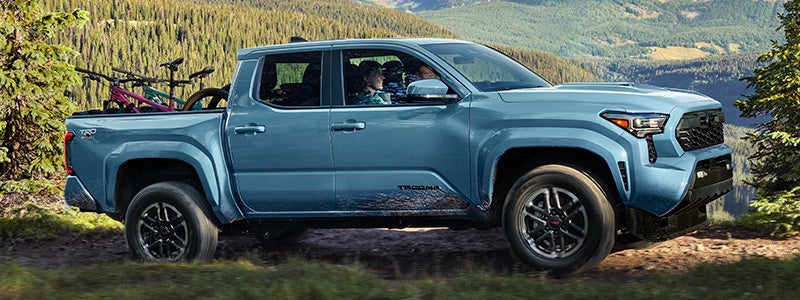
Truck shoppers around Waldorf tend to ask the same question once they narrow the field to midsize trucks: which one actually works for how I live, not just how I drive to work. The Toyota Tacoma and Chevrolet Colorado are two of the most cross-shopped trucks in the segment, and the right pick usually comes down to a handful of real numbers. The 2026 Toyota Tacoma starts at $32,145 with up to an estimated 326 horsepower and 6,500 lbs of max towing, while the Chevrolet Colorado starts at $32,400 with 310 horsepower and up to an estimated 7,700 lbs of towing capacity. At Waldorf Toyota, we spend most days talking through exactly this kind of comparison with buyers across Waldorf, St. Charles, Prince Frederick, Bowie, and Fort Washington. This guide breaks down engine options, towing capacity, off-road trims, and interior technology side by side, so you can walk in already knowing which questions matter most for your daily drive. Key Points: Toyota Tacoma vs Chevrolet Colorado The Tacoma is the only one of the two with a hybrid engine option. The i-FORCE MAX hybrid powertrain pushes output to 326 horsepower and 465 lb-ft of torque, well above the Colorado's single-engine lineup. The Colorado tows more on paper, but the gap matters less than it looks. At up to an estimated 7,700 lbs versus the Tacoma's 6,500 lbs, the Colorado leads on raw capacity, though most boats and trailers common in Southern Maryland fall well under either truck's limit. The Tacoma pairs its hybrid power with a dedicated overlanding trim. The Trailhunter is purpose-built for long-distance off-road travel, something the Colorado lineup doesn't offer an equivalent for. 2026 Toyota Tacoma vs Chevrolet Colorado: At a Glance Specs only tell part of the story, but they're the right place to start. Here's a fuller side-by-side look at the numbers shoppers ask about most before we get into what each one actually means for daily driving. Spec 2026 Toyota Tacoma 2026 Chevrolet Colorado Starting MSRP $32,145 $32,400 Engine Options Two: 2.4L i-FORCE Turbo or i-FORCE MAX Hybrid One: 2.7L TurboMax Turbo (all trims) Max Horsepower 326 hp (i-FORCE MAX Hybrid) 310 hp Max Torque 465 lb-ft (i-FORCE MAX Hybrid) 430 lb-ft Max Towing 6,500 lbs 7,700 lbs Max Payload Up to 1,710 lbs Up to 1,710 lbs Payload, Top Off-Road Trim 1,620 lbs (TRD Pro / Trailhunter) 1,310 lbs (ZR2) Seating Capacity 5 5 Available Touchscreen 14 in. 11.3 in. Standard Digital Gauge Cluster 12.3 in. 11 in. Overlanding-Specific Trim Trailhunter Not offered Basic / Powertrain Warranty 3 yr/36,000 mi / 5 yr/60,000 mi 3 yr/36,000 mi / 5 yr/60,000 mi Figures are manufacturer-published estimates and vary by trim, cab, and drivetrain configuration. Payload drops on higher off-road trims for both trucks due to added suspension and skid plate weight. Pricing reflects manufacturer starting MSRP and excludes taxes, fees, and dealer charges. Contact Waldorf Toyota to confirm current availability and pricing. A few things stand out once you put both trucks side by side. The Colorado runs one engine across its entire lineup, while the Tacoma splits into two distinct powertrains depending on how much power and torque you actually need. The base Tacoma's 278 horsepower trails the Colorado's 310, but step up to the i-FORCE MAX hybrid and the Tacoma jumps ahead to 326 horsepower and a substantial 465 lb-ft of torque. The Colorado's ZR2 loses over 400 lbs of payload compared to its base trim once the heavier off-road suspension goes on, while Tacoma's own top off-road trims hold onto noticeably more payload, at 1,620 lbs. Starting prices land within $255 of each other, so the real decision usually comes down to configuration, not sticker price. Engine Options and Performance The 2026 Toyota Tacoma offers two engines built around different priorities. The standard i-FORCE 2.4L turbo produces 278 horsepower and 317 lb-ft of torque, a solid baseline for daily driving and light towing. The i-FORCE MAX hybrid is a combined gas-electric powertrain that pairs the same 2.4L turbo engine with an electric motor to add power and torque without switching to a larger engine. That combination pushes output to 326 horsepower and 465 lb-ft of torque, a meaningful jump for anyone who tows regularly or wants stronger passing power on Route 5 or 301. The 2026 Chevrolet Colorado takes a simpler approach. Every trim, from the base Work Truck to the ZR2, runs the same 2.7L TurboMax turbo-4, rated at 310 horsepower and 430 lb-ft of torque. That consistency means Colorado buyers know exactly what they're getting no matter which trim they choose. Tacoma buyers get more of a choice: a lighter-weight base engine for straightforward driving, or the hybrid for meaningfully more capability. Towing Capacity: What the Numbers Mean in Southern Maryland Towing capacity is one of the few specs that translates directly into whether a truck fits your life. The 2026 Toyota Tacoma tows up to an estimated 6,500 lbs on its highest-rated configuration, the SR5 or TRD PreRunner with the standard i-FORCE engine. Interestingly, the hybrid i-FORCE MAX trims max out closer to 6,000 lbs, since the added battery weight offsets some of the extra power. The 2026 Chevrolet Colorado tows up to an estimated 7,700 lbs, a real advantage on paper across its lineup. For Southern Maryland buyers, that gap matters most if you're regularly hauling a larger boat or a loaded travel trailer. Most fishing boats common on the Potomac and the bay fall in the 3,000 to 5,000 lb range fully loaded, well within either truck's capacity, and the same goes for landscaping trailers and small campers. Colorado's higher ceiling is real, but plenty of Tacoma configurations cover what most owners actually tow week to week. Off-Road Capability: TRD vs. Trail Boss, Z71, and ZR2 Both trucks field a three-trim off-road lineup, but they aim at slightly different terrain. The TRD Off-Road trim starts with trail-ready clearance and terrain modes. The TRD Pro adds 2.5-inch FOX Internal Bypass QS3 shocks and IsoDynamic front seats built to absorb impact on rough terrain. The Trailhunter takes a dedicated overlanding approach, with Old Man Emu forged monotube shocks, a high-clearance front bumper, rock rails, and an ARB steel rear bumper, plus the payload to back it up at 1,620 lbs. Chevrolet builds its off-road lineup around the Trail Boss, Z71, and ZR2. Trail Boss adds a 2-inch factory lift and four drive modes. ZR2 goes further, with a 3-inch lift, Multimatic DSSV dampers, and up to 4.5 inches of extra ground clearance, though payload drops to 1,310 lbs to get there. The ZR2 Bison, built with AEV, reaches 12.2 inches of ground clearance on 35-inch tires. The choice usually comes down to Tacoma's overlanding-ready Trailhunter versus Colorado's rock-crawling-focused ZR2. Interior Technology and Everyday Comfort A truck that tows a boat on the weekend still spends most of its time on a daily commute. The 2026 Toyota Tacoma pairs its standard 12.3-inch digital gauge cluster with wireless Apple CarPlay and Android Auto, plus a 3D Multi-Terrain Monitor on off-road trims for trail navigation and tight parking alike. Both trucks now run fully digital instrument clusters and infotainment, a shift from the analog gauges that defined this segment a few years ago. Tacoma's larger available touchscreen edges out Colorado on screen real estate, while Colorado's Google built-in system appeals to drivers already inside that ecosystem. Which Midsize Truck Fits Your Life? Neither truck is the obvious answer for every buyer. A few starting points based on how you actually plan to use it: Maximum towing is the top priority: The Colorado's 7,700 lb rating gives you more room if you're regularly pulling a larger trailer or camper. You want hybrid power and torque without giving up a gas engine: The Tacoma's i-FORCE MAX hybrid delivers more horsepower and torque than either truck's standard engine. You're building toward serious overlanding or rock crawling: The Tacoma's Trailhunter and TRD Pro trims, or the Colorado's ZR2 and ZR2 Bison, are both purpose-built for that use case. Daily commuting comfort matters as much as capability: Either truck's standard trims cover that well, though the Tacoma's larger available touchscreen stands out. Explore the Tacoma at Waldorf Toyota If the Tacoma's mix of hybrid power, off-road trim variety, and everyday comfort sounds like the right fit, Waldorf Toyota carries the current lineup at 2600 Crain Hwy, Waldorf, MD 20601, serving drivers throughout St. Charles, Prince Frederick, Bowie, Fort Washington, and Washington D.C. Browse our new Toyota Tacoma inventory to see current configurations, or visit us for a test drive to feel the difference between the standard and hybrid powertrains for yourself. The best way to know which truck fits your life is still to get behind the wheel. Contact us today!